Friday, December 25, 2009

Merry Christmas from the Charingworth Orchard Trust!


Friday, December 18, 2009

Pruning advice under a snowy sky


This morning Jim Aplin, a market gardener and experienced orcharder, came to Charingworth to give me some pruning advice. It was very useful to walk around with a pair of experienced eyes and helped to give me some confidence before the New Year's assault.


Jim was saying that a cold spell is often good for the health of an orchard as it helps to kill diseases and pests within the trees. It will also help the sap to sink out of the branches and reduce the stress from pruning.


The weather was bleak and moody.

Friday, December 11, 2009

Charingworth Orchard Trust in the National Trust orchard newsletter!


This is 'Orchard Matters', a newsletter produced by Kate Merry who is leading the National Trust's recent traditional orchard renaissance. At the end of the summer I sent her an article to include in the Auntumn issue. Just in case you missed it, here it is (let me know if you want me to email an electronic version of the whole newsletter):


Shifty pose? I think so!

Tuesday, December 1, 2009

Four quality blogs I have recently encountered


http://www.tomtheappleman.wordpress.com/

Tom is also in the orchard restoration game, but at a more professional level than me. Have a look at some of his projects involving seriously overgrown sites. He can also lay hedges and dry stone wall. Skills to pay the bills!


www.davidcooksonimages.blogspot.com/2009/08/fruitful-day.html

This photography blog is excellent, and the link above should take you straight to the post entitled 'A Fruitful Day' where he has managed to snap two illusive bird species that are real orchard specialists. All the more impressive since he lives in Lancashire, where orchards are pretty thin on the ground.


www.jamesrussellontheweb.blogspot.com

James Russell has written a book on the history of traditional orchards entitled 'Manmade Eden' - it's on my Christmas list! He is also researching 'The Naked Guide to Cider', 'a quirky and encyclopedic book about cider and the culture surrounding it'.


http://www.avondiary.net/?p=91

This diary is written by a keen angler who has some very sensible things to say about the countryside around the river Avon. See if you can find his picture of a stage beetle, it is epic.

Saturday, November 28, 2009

Sentimentality for summer orchards

video

Just as the winter weather starts to get nasty, here's a little look back at a blissful summers day I spent visiting a immaculate local orchard in Warwickshire. A welcome tonic after days digging root vegetables in the driving rain!

Tuesday, November 24, 2009

Heavy machinary in the Charingworth orchards


Last Wednesday my neighbour John Langston brought his tractor to the orchards to help me do some grass mowing. It was such a beast that we couldn't take it between the trees but we managed to cut a few more open areas that were beginning to succeed to scrub. Flailing can be a destructive process, but it is probably the best way of dealing with large areas of really rough grass and brambles. For that afternoon at least, the crunching sound of the flail carried by the wind really was the sound of progress!


The lowest of these three 'before and after' shots shows the 'meadow area' at the back of the lower (1940s) orchard. It has always had a bad dock infestation that has made farming this patch impractical. However, I believe that chemical fertilizers have not been heavily used here and as a result there are already patches of Birdsfoot Trefoil and Meadow Vetchling that flourish in summer. Flailing will hopefully encourage these and prevent blackthorn, buddleia and poplar saplings from becoming dominant. I plan to seed some areas where the tractor has exposed soil with a wildflower mix and see whether anything establishes.


Here is a clearing in the 1920s orchard that we also flailed. I am planning to do some replanting in this area before Christmas. I am currently tempted by the idea of a couple of Blenheim Orange (likes clay) and an Orleans Reinette (fantastic eater, apparently) and perhaps some bittersweet varieites for cider. They have to be on M25 rootstocks though as I want them to grow BIG!

Thursday, November 19, 2009

Checking the barn owl box in the lower orchard at Charingworth


On Tuesday my friend Freddie and I took a ladder into the lower orchard to retrieve a pulley from up in a tree. We also took the opportunity to have a peek into one of the two barn owl boxes we erected in the orchards one month ago. The photo on the right shows why its good to check the boxes when it's not the breeding season. I removed that pile of ivy (hat for scale) that had been crammed into the box by a wood pigeon or dove. Barn owls are unlikely to use a box that has been filled with debris and so a respectful amount of intervention is necessary to give them a hand.

Sunglasses were appropriate (a rarity for November!) as a precaution against the slim chance of us disturbing a grumpy tawny owl. Neither of us wished for the fate of Eric Hosking, 'the most celebrated British wildlife photographer of the 20th century' (Birds Britannica), who lost an eye when scratched by a territorial tawny he was photographing. He got a fantastic photo of the culprit for his pains though.


I also discovered that one of my neighbours, Louise, is well on top of the agenda as she has a fantastic box she erected two years ago. It has been checked and so far, no signs of owls. Having a range of potential nesting sites gives the birds some choice and flexibility, hopefully increasing the stability of any population that establishes locally.

Sunday, November 15, 2009

'Wild' honey bees in the lower orchard at Charingworth

video
Today I was in the 1940s orchard clearing brambles away from the fearsomely shrouded branches of tree 40. I found a surprisingly active colony of honey bees in the south facing base of one of the trees nearby. Honey bees are not actually native to Britain. There are 'feral' populations of the European honey bee, a domesticated form of the bee Apis mellifera that originated in eastern tropical Africa. Beekeepers and orchards have a long history of symbiosis, with the beehives traditionally brought into the orchard in late spring for the blossom. This way the pollination of the blossom is maximised, helping ensure a good apple crop for the farmer and lots of nectar for the bees to make honey with.


I remember that the cavity had had unoccupied combs in it last winter and has clearly been repossessed by the bees. The photo on the left shows this comb in November 2008, with the one on the right taken today. Honey bees are not doing well in Britain currently. They are suffering from a range of new diseases, including the parasitic varroa mite that has spread viruses throughout wild and captive bee colonies.


The press often deal with these issues rather clumsily, confusing the causes of the decline in feral honey bee populations with those of the truly native bumblebee (23 species) and solitary bee (~250 species). The basic reason for the decline in most of our true native bee species has little to do with diseases- agricultural intensification has removed the majority of our species-rich grasslands and thus there are no longer enough nectar-rich plants to support bumblebee colonies and solitary bees (this photo shows a unimproved lowland flood meadow near Bledington, with abundant clover and birdsfoot trefoil). A lack of appropriate nest site habitats is also probably a factor limiting some bumblebee and solitary bee species. I went on a bumblebee walk on Salisbury Plain in August and met Damian who is interested in all these issues and has his own charity dedicated to helping bees.

Tuesday, November 10, 2009

Betty Daffurn's orchard legacy at Kemerton


© Copyright David Hawgood and licensed for reuse under this Creative Commons Licence

The other day I went on a pilgrimage to Daffurn's community orchard in Kemerton. This is the cottage Betty lived in for 94 years. It was the first true community orchard I have visited and looked very carefully maintained. The area has a fantastically motivated and established Conservation Trust that owns several wildlife sites and oversees the management of some 1,280 acres of land around Bredon Hill. The orchard restoration work carried out by the Kemerton Conservation Trust recently received a significant amount of funding from the National Trust. If only all British villages were as well endowed with enlightened perspectives on farming and wildlife.


I think they may have snowdrops, wild daffodils(?) and bluebells in the orchard. To get a true feeling for any community orchard I think you need to meet some of the workers that maintain it. Unfortunately I didn't have enough time to prearrange such a visit, but the orchard in itself is very interesting as wildlife sanctuary and piece of local history. I look forward to them releasing the species lists for the orchard from the directory of 45,000 records for the local area!


No one has ever been killed by a sheep. They were doing a good job of keeping the sward down when I visited, which looked distinctly unimproved and herb-rich.

Tuesday, November 3, 2009

Conderton, Worcestershire: an orchard of national importance?


Today I braved some fairly angry rain storms to visit a big pear orchard in Conderton (near Tewksbury), Worcestershire. At several hectares in size, several hundered trees and over a century old, there's an awful lot to try and condense into a few photos. It is certainly one of the best orchards I have yet visited and perfectly illustrates the similarity of old traditional orchards to woodland pasture. Indeed, because of it's size and scale I don't expect there are many in the whole county to rival it, especially in terms of habitat diversity and potential for biodiversity. It is begging out for a full species inventory to be undertaken.


That hole was perfect for a Little owl and they love orchards like this one. This is also one of the first orchards I have documented that have had abundant mistletoe (Viscum album) in them. It just doesn't seem to be as common around Charingworth. Misletoe is interesting because it acts like a minature ecosystem supporting six invertebrate species that entirely rely on it.


One of these mistletoe-dependent species is the Mistletoe Marble moth, Celypha woodiana, a UKBAP species. You can detect it by looking for characterisitic damage done by the leaf-mining larvae to the leaves (but alas I did not know this until now and so did not check for it!). The other five species dependent on mistletoe are the weevil Ixapion variegatum (first recorded as a new British species in a Herefordshire orchard in 2000) and four ‘true bugs’ (belonging to the Order Hemiptera): the capsid bug Pinalitus visciola, the predatory Anthocoris visci, the Jumping Plant Louse Psylla visci, and Hypseloecus visci (discovered as recently as 2003 in Somerset).


How about that for a wildlife woodpile? An incredible spread. Fortunately there are also many dead trees that have been left standing as well. The orchard has an incredible range and volume of dead wood; standing, shaded, large logs, full fallen trees and even logs submerged in water. This provides much of the substrate for fungal and microbial decomposition, which is in turn exploited by a whole suite of insects that provide food for all the larger animals.


A lesser stag beetle I found underneath one of the large pear logs pictured.


Orchards often contain other structural features of the landscape preserved around or within them. This one had several very large old ash pollards (and one of field maple). These could house larger raptors and owls and add a different dimension of habitat complexity.


Only whole-dead trees like this provide enough appropriately decomposed wood to support the development of large beetles like the stag beetle, and some species of longhorn beetle and click beetle whose larvae can take seven years to develop.


I'm certainly no lichenologist, but every tree seemed to have a quite varied lichen community and traditional orchards like this are excellent lichen habitats with old trees and low chemical inputs.


What a fantastic orchard landscape that is. I'm betting on Blenheim Orange for the gnarly gentleman in the foreground. It seems to be a real bird haven too, for even though I went without any binoculars, I immediately saw two green woodpeckers take off with their characteristically undulating flight. I spotted many yellow meadow ant hills that they love to feed in. There were also clouds of fieldfare that were pestered by a sharking sparrowhawk at one point. I must make a concerted effort to contact the Overbury Estate and learn more about this special place.


Sunday, November 1, 2009

Tracking down traditional orchards online


© Copyright Philip Halling and licensed for reuse under this Creative Commons Licence.

A guy I work with, Richard, has tipped me off about a big pear orchard that he looks out into from his house in Conderton, Worcestershire. In the photo I think it's almost certainly the field at the back of the village and it looks very promising. I tracked this photo down on Geograph, a really handy website I often use to search for interesting orchards.


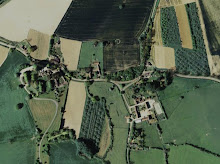
This image is from the latest Google Earth program. There looks to be well over 100 trees here, and most look mature. If so it could be the biggest pear orchard I've ever visited. I will keep you updated. How exciting!

Thursday, October 29, 2009

Grass strimming for biodiversity in the 1920s orchard


Last month I hired this 'DR mower' to make a start at cutting the grass in the 1920s orchard while the ground was still hard. As you can see, five years of growth has left it looking pretty tropical! This 'rank' vegetation is really good for small mammals (and the things that feed on them) and provides cover for all the birds that nest in the trees. However it is largely made up of coarse grasses such as Cocksfoot, False Oat Grass, Yorkshire Fog and Perrenial Rye grass that outcompete most wildflowers and thus limit nectar supplies for insects. Tall vegetation can limit air movement around the trees and this is detrimental for the development of fruit and can promote fungal infections in the tree.


When the orchards were under commercial use the grass swards were fertilized quite regularly. This has had a couple of unfortunate consequences for my restoration.

1) Coarse grasses and nutrient-loving plants (e.g. nettles, hogweed, docks, creeping thistle, cow parsley) have come to dominate preventing less competitive wildflowers from co-existing.
2) Without consistent management the orchards quickly become overgrown.

Simply cutting the grass is no long-term solution as the nutrient status of the soil remains unchanged. To re-establish wildflowers the soil muct be stripped of nutrients either by removing the cut material and not letting it rot down (= hard work), or grazing with sheep/cows/geese (=need fencing, wire to protect trees, animals..!). I am yet to find the best solution.


This photo sums up what I want to achieve with this strimming. The maximum biodiversity potential for the orchard will incorporate the greatest range of diffferent habitats. Areas of long grass will be left for small mammals (and forage for birds of prey), insect overwintering sites and bird cover. Areas of short grass will imporve the health of the fruit and trees, provide opportunity for less vigorous plant species and allow sun to warm standing dead wood and aid insect larval development.

Tuesday, October 27, 2009

A golden day


Can you belive that I took this photo last week? Amazing Autumn weather. Also, I found this nice website set up be a guy called Neil Phillips. Some excellent photos of more modern orchard setups and older ones. He's also got an interesting project underway recently too which should be interesting to follow...

Monday, October 26, 2009

Owl feathers


Three barn owl feathers I found in a roosting site inside a disused sheep shelter near my house. Barn owls have very soft feathers for flying silently and are vulnerable if they get too wet. They use a few familiar spots to retreat to if caught in the rain on a hunting trip. The last feather in the photo I found in our unused stable block- I think it may be from a tawny owl since I once disturbed one in there during the day.

Friday, October 23, 2009

Wonderful dead wood for wildlife


I made this woodpile today out of old plum tree wood. It is tailored to suit the Noble Chafer (Gnorimus nobilis) with a large surface area facing south to ensure the wood is warmed as much as possible by the sun, thus aiding the development of the larvae (it should be good for all sort of other insects as well). Really looking forward seeing the first adult beetle hopefully next summer.


There are two fully dead apple trees located in clearings within the 1920s orchard, this being one of them. They are fantastic habitat for insects and I hope to leave them untouched during the restoration. There are not enough examples of large exposed dead trees within the British countryside and as a result many specialist creatures have suffered.


I think this is a type of wasp, but any further than that I don't know. It was on one of the dead trees in the upper orchard.

Wednesday, October 21, 2009

BBC's 'Autumnwatch' undersells the wildlife value of traditional orchards


This year's series of 'Autumnwatch' started recently on BBC 2. Included within the first show was a trip to the orchards associated with Westons cider in Herefordshire to have a look for some of the wildlife associated with orchards. They set themselves a few conditions for selecting an appropriate site: 'The chosen location had to be a working orchard and there had to be an abundance of wildlife'.


A photo of a commercial cider orchard at Westons, Much Marcle. (This one is younger than the ones where the bulk of the filming was done but it gives you an idea of how different commercial cider orchards are to your typical traditional orchard.)

Surely the first proviso should have been to film somewhere that most resembles the orchard that the largest number of British citizens are likely to encounter? I felt that Westons extensive orchards were inappropriate on two counts. 1) They are managed intensively and are largely not traditional orchards. In the footage you can see herbicide strips, mown grass and semi-dwarfing trees that do not provide habitat for many of the more interesting or rare orchard species. If you want to film orchard wildlife, why choose an orchard that is unlikely to have many species? 2) The majority of British orchards are not like that. They are small, often not currently in use, extensively managed through grazing and have much older, larger trees. Because of this they are much richer habitats. They are also much more threatened and far less appreciated (and thus could really do with good PR from the BBC!)

Autumnwatch is aimed at engaging the largest possible audience with wildlife in Britain- there is certainly an important place for a program like this. Why try to engage people in the widlife value of orchards with animals that can be found in the average London park or back-garden though? The list: rabbit, grey squirrel, wood mouse, tawny owl, greater spotted woodpecker seems less than inspiring. Would it not be more engaging to spend a little more time filming and track down orchard specialists like lesser spotted woodpecker, barn owl, little owl, noble chafer, stag beetle or fieldfare?

For example, Westons buy organic cider apples from a fantastic heritage cider orchard (and nature reserve) at Tidnor Wood. Here they have older trees, mistletoe and surely more of interest for the Autumnwatch team. Or virtually any other old farmhouse orchard. It was a very disappointing piece of television that makes me feel a little less hopeful for the future of traditional orchards in Britain, but a little more steely too.

Sunday, October 18, 2009

Second barn owl box installed at Charingworth


The second barn owl box has now been installed about six metres up in a poplar tree overlooking the lower (1940s) orchard at Charingworth. Percy and Herbie can only stare up and dream of having such luxury accommodation. It took three evenings to get it done after a few complications...


The 'improved' design sporting a few modifications undertaken by my dad under the advice from the Barn Owl Trust website: 1) roofing felt for extra waterproofing; 2) a baton-to-baton attachment for increased strength (over the previous single bolt and keyhole attachment); 3) a small rim around the balcony to prevent young chicks falling off so easily. Should be interesting to compare the success of this box with the unmodified one in the other orchard...


Without the impressive upper body strength of my friend Angus, a new way of installing the box had to be thought up. Ideally you need three people and a long ladder. The basic method was:

1) attach a pulley into the tree above the height you want the box at, i.e. as high as feasibly possible,
2) attach a baton (with pre-drilled holes for bolts) horizontally (spirit level) onto tree at desired height,
3) build a net of rope (see photo above) and hoist the box up,
4) marry up the corresponding baton on back of box to the attached baton on tree, using pulley to hold the bulk of the weight of the box,
5) secure with bolts through both sets of holes, and
6) tea.


As you can see from the quality of this photo its probably best to give yourself lots of time to do this. We flirted dangerously with the twilight hours but it feels amazing to have got another box up.


The view from the box into the 1940s orchard. I had to do a fair amount of trimming to ensure the box entrance had a clean flightpath in. This is really important though- barn owls are very unlikely to use a box that they can't easily fly into because of obstructing branches.


I was also fantastically lucky yesterday. This is the ash pollard we have been keeping an eye on since I found pellets and feathers inside it. On a dog walk I decided to have another look up inside it and I saw a barn owl perched right at the top up against one of the hollow sides! I will give it some distance now as I don't want to disturb it. It doesn't look like there is enough of a platform in the tree for a pair of birds to breed in there so maybe it's only using this tree as a roost. Good news though.

Monday, October 12, 2009

An orchard from the 1890s at Girton College, Cambridge

I was in Cambridge today and headed up to Girton College on the bus to check out their orchards. The head gardener, Mr Robert Bramley helpfully filled me in on what is known of the Old Orchard and its history and upkeep. Planted in the 1890s to provide a supply of fruit for the College's kitchens, it has plum, pear, apple and cobnut trees with over thirty varieties. Its really beautiful- many of the original trees remain in good condition and the area is a haven for wildlife (including lichens apparently). The visit provided an invigorating contrast to the bland planting schemes and quick turnover borders that Cambridge Colleges can be tempted by in their courts.


Can you spot the treecreeper?


This tree in the foreground is a fine example of a Blenheim Orange. Note the characteristically gnarly bark that is reminiscent of some of those veteran trees from Mount Pleasant, Warwickshire. This variety should like the heavy clay in Charingworth.


Girton College has not been very pro-orchard in recent years. A quite extensive orchard was planted in 1948 as an alternative fruit source to the Old Orchard. Recently it was removed to allow for a 're-organisation' of their sports pitches. My friend Lester was at Girton at the time and signed a petition to try and stop this, but to no avail. I think the trees were all only semi-dwarfing and so its some consolation to think it wasn't a majestic orchard of standards. Fortunately the Old Orchard at Girton is rather more respected but it's frightening how little protection these places have currently have under British law.


The area highlighted in blue was the 1948 orchard circa 2006. Now it's a rugby pitch. Ouch.


I also met Sir David Attenborough who was in Borders for a book signing to promote his new book 'Life Stories'. I couldn't resist giving the Charingworth Orchard Trust a little plug and he said: 'Ancient orchards are very precious places'. Here here! I got really star-struck and nearly wandered out without paying for my book.

Sunday, October 11, 2009

A giant 'Green Horse' spotted near Broadway


Many thanks to Karen and Mark for sending me this photo of another giant perry pear tree near Broadway, Worcestershire. (They think it's the variety 'Green Horse', hence my rather lame bit of wordplay!) They are the craftsmen behind Rockingham Forest Cider and have an excellent blog too which has a good bit of detail on the process of making perry, that softly sophisticted English drink.

Tuesday, October 6, 2009

Perry pears in Bledington, Gloucestershire


Next to an old farm by the King's Head Inn, Bledington is this superb perry pear orchard. It has twelve trees, all of different varieties and all well over 100 years old. I expect it is particularly beautiful when the blossom is out so we may have to pencil in a revisit for early next year...


Apparently, 'You plant pears for your heirs'. Not sure about my heirs just yet, but I like the idea of investing in such a long lived fruit tree. I really want to get a few planted at Charingworth but I need to track down somewhere that supplies them and see if I can get any varieties unique to the Cotswolds. (Then heirs?)


All twelve trees are different. I expect this is quite usual for old farm orchards, where having a lot of different varieties to choose from was more useful than just one or two. Perhaps having a range of fruit helps with making perry too. Unfortunately I am a complete beginner with perry pears but it would be great to take along an expert and get these identified. Must learn more!


This tree was particularly impressive, with its huge twisted trunk an ideal habitat for all kinds of creatures.


This is the same tree as the previous picture, with me sitting for scale. I think it may be the biggest pear tree I have encountered so far, even larger than the beauty at Mount Pleasant near Shipston-on-Stour. I wonder if anyone out there knows of a bigger one?