Showing posts with label perry pears. Show all posts

Tuesday, November 22, 2011

Biologische Obstspezialitäten: Swiss organic fruit farming the traditional way


Using the internet to document my orchard obsessions has allowed me to discover fruity wonderlands in far away lands. Recently, I was contacted by Helmut and Monika who manage such a place on the southern shore of Lake Constance in Switzerland between Romanshom and Arbon. They've generously donated some photos of their farm, and I think you will agree with me that it looks like quite a place!


It's a rare example of a commercial fruit farm of the most traditional form, with 550 trees of apple, pear, plum and cherry set over 10.5 hectares. The trees are standards, planted on vigorous rootstocks and allowed to grow to full height. These are the type of orchards that are so rich in biodiversity and are a 'priority' habitat for conservation in the UK. It has been a family run enterprise for 120 years, but the age of some of the trees demonstrates a tradition of fruit growing that stretches back much further.


This photo shows one of their fantastic old perry pear trees, a type of fruit tree that is particularly beautiful after a hundred years of growth. Sadly trees like this are becoming increasingly rare in the UK.


This tree is an apple variety called 'Gravenstein' that Heklmut and Monika make a single variety sweet cider from. You can see the poles they use to prop up the heavily laden branches preventing breakages in the Autumn - a technique I haven't yet seen employed in Britain. Tender loving care!


This is another apple called 'Muolener Rosen'. Apparently is a variety that is largely unknown but produces a very healthy vigorous tree that crops productively in alternate years. Many cider varieties show this cropping pattern in Britain, especially in unpruned traditional orchards.


Harvest time in the orchards. The farm is totally organic, with the main income coming from sales of fresh fruit and sweet cider in the farm shop. They also supply apples and pears to a local cider factory. They also supply to retail outlets in Bern and Basel.


They produce other single variety ciders, such as 'Sauergrauech', 'Leuenapfel' and 'Taffetapfel'. (Just when you thought you were making headway in the labarinthine world of fruit varieties, hey!).


A pleasing traditional orchard scene with the next generation of trees beautifully complementing the more venerable characters! If only more orchards in Britain had such a continuity of horticulture and habitat.


Autumn colours remeniscent of James Stanley's orchard near Ebrington in Gloucestershire.


I'm not sure what the winters are like in this part of Switzerland, but presumably they are pretty hardcore. Ideal for killing off pathogens in the trees and preventing disease outbreaks.


This amazing tree is a another perry pear. A fruit-growing research station near Zurich came down and aged this tree at 300 years old! The variety is called 'Wagner's Wildbirne' that is good for fermenting and drying too. Apparently its found nowhere else in Switzerland. You get trees approaching this age in Britain but I have never seen one with such wide spreading branches. She's a BEAUTY!


They have also developed their own variety called the 'Emmy' apple which is exclusively available from this farm. Thats the young tree in the foreground here. Helmut and Monika explained that they included this photo to illustrate that with vigorous 'seedling' rootstocks (e.g. M25) it is a fallicy that it takes years and years for trees to start producing.

All in all, I feel an orchard holiday in the making!

Friday, October 28, 2011

The surviving orchards of Ebrington


Looking down towards Chipping Campden from one of the only old cherry orchards left in this part of Gloucestershire. In this area, it's better to focus on what is left to preserve rather than dwell on what has been lost.


This is James Stanley, a farmer who lives locally to me. He looks after several fantastic old orchards that I spotted via Google Earth. Today he was kind enough to take me on a guided tour of his orchards and the weather couldn't have been better for it. This tree is a Blenheim Orange. I've encountered a few old ones like this - they're impressive trees and always recognisably by the gnarly bark. It's a tasty late dessert apple variety found in c. 1740 as a 'gribble' by a gardener, Mr Kempster, on the boundary wall of Blenheim Palace in Woodstock. (A 'gribble' is an apple tree that has germinated naturally from a pip in the countryside, in case you were wondering!).


It is a classic traditional orchard, with all the trees widely spaced on standard rootstocks that has enabled the tress to grow large enough to cope with cattle grazing for many years. James was telling me how he used to pick from all the trees using tall ladders and sell the fruit locally. Sadly now there is no market for the varieties except intermittent custom from local cider-makers. Hooray for cider, again!


This is an interesting tree. James has a whole row of these, with spectacular claret fruit. James' father used to call these "Devlins".


Looks can be deceiving though, as they taste pretty cardboardy and apparently only really sold during the war when everyone was short on options.


Beautiful perry pear trees again, reminiscent of an orchard in Bledington and my new friends Helmut and Monika's farm in Switzerland.


Because it has been so dry and sunny recently the trees have kept their leaves really well - look at the colour of this perry pear!


Sadly this orchard has a real issue with 'generational bias', like many traditional orchards. If they no longer have a commercial use then there is no incentive to 'gap up' when trees die and an orchard with no young trees will slowly fade away...


Is this Ebrington's last plum orchard?

Monday, February 1, 2010

How to plant a fruit tree


Over the weekend I planted the 'Bergamy' perry pear maiden (1 year old) I bought at Day's Cottage last Thursday. It will take at least 15 years to get going fruitwise, but could live 350! 'Plant pears for your heirs', as the saying goes. Planting trees of any sort (even Laylandii?!) is very addictive, but there is much more to it than just digging a hole. A few things to remember with fruit trees:

1) Choose a site. Avoid anywhere that remains waterlogged for long periods or is really exposed.

2) Dig a big hole and fill it back up again with well rotted manure/good composted organic matter.

3) Don't plant the tree too deeply. As the soil settles the tree will sink leaving a bowl that may fill with water. If much of the trunk becomes buried the tree will struggle. It's best plant the tree quite shallowly and then mound the soil up to cover the roots.

4) Water in well.

5) Staking is important as it will prevent the tree from blowing over and give the roots a chance to establish. Recent thinking suggests that it is also beneficial to avoid securing the tree to firmly to a stake as some wobbling encourages the tree to establish a more sturdy root system at an earlier age. So basically, if you're on quite an exposed site then use a stake that's as big as your tree and attach it with a rubber tie quite high up on the tree. On less exposed sites (like mine) you can get away with a lower fastening.

6) Mulching is also a good idea to prevent weed competition. I used some cardboard pegged down that will slowly rot. Bark chips or breathable/biodegradable plastic are other alternatives.

7) Guards. Essential in some form for any new tree. Use a spiral or mesh guard for planting a tree in your garden to stop rabbits. If your field is going to be grazed then you need to think about something more substantial. For sheep you can probably get away with a 4ft metal mesh guard or similar. If you know there may be deer about this will need to be 6ft. For cattle or horses you need a mega post rail and wire construction that will look ridiculous compared to your stick like maiden but is very necessary.

8) Keep an eye on it! Most people make the mistake of planting the tree and thinking that's the job done. Aftercare is essential for success and the first year is when you are most likely to lose the tree. Lone trees in fields are also very tempting perching spots for raptors so it may be an idea to have a taller 'perching post' that will prevent unfortunate accidents!.

Friday, January 29, 2010

National Trust orchard training day at Day's Cottage: A tour of the orchards


Yesterday I went to Day's Cottage in Brookthorpe near Gloucester for an orchard training day. It was hosted by Dave Kaspar (GOG chairman) and Helen Brent-Smith at their Orchard Skills Centre on behalf of the National Trust. The day started with a tour of the orchards, the oldest of which was planted by Helen's great aunt in 1912. In this picture Dave is explaining that this dead tree is the most important tree in the orchard from an ecological viewpoint, due to the value of standing dead wood for invertebrates and the things that feed on them. As you can imagine, I was in my element!


This Newton Wonder apple tree was blown over only recently, but it is far from doomed. The tree will respond to this stress by putting out more roots and over time it will gradually re-align its canopy. I think it is healthy to encourage a more Victorian perspective on tree beauty, where the gnarls and warpings of time are celebrated and admired.


We also visited an old perry pear orchard which had several trees about 150 years old. We were shown how pear trees have very obvious graft marks even in old age. Perry pears have been recorded to live over 350 years, far longer than any apple. Dave explained how they are best left to their own devices and he regularly advises people not to try and prune them. I think the tree pictured is the variety Butt.


They have about 16 acres of orchards around the site that are being managed very sensitively for wildlife with mistletoe, bird and bat boxes, standing dead wood and no chemical inputs. This tree in the foreground has been toppled for a lot longer, and you can see it has recovered its posture quite admirably and still produces fruit. It reminds me of the Blenheim Orange trees at Mount Pleasant.


This is the museum orchard that was started around 15 years ago in partnership with Gloucestershire council and the GOG as a bank of Gloucestershire apple varieties. New varieties are still being found by people like Charles Martell so it's an ongoing project but it is old enough for the trees to be starting to take off. It's so exciting to think of returning in twenty years to see an established orchard and for an apple off each tree...


Here is my friend Freddie, a longstanding volunteer with the Charingworth Orchard Trust and Tanya, a beekeeper with her own company called Apples and Pears. We were pretty pleased to be able to purchase some perry for tasting later on!


The loot. Mistletoe for seeding at home, a perry pear maiden of the variety 'Bergamy' ("pronounce carefully") and superior grog.

Tuesday, November 3, 2009

Conderton, Worcestershire: an orchard of national importance?


Today I braved some fairly angry rain storms to visit a big pear orchard in Conderton (near Tewksbury), Worcestershire. At several hectares in size, several hundered trees and over a century old, there's an awful lot to try and condense into a few photos. It is certainly one of the best orchards I have yet visited and perfectly illustrates the similarity of old traditional orchards to woodland pasture. Indeed, because of it's size and scale I don't expect there are many in the whole county to rival it, especially in terms of habitat diversity and potential for biodiversity. It is begging out for a full species inventory to be undertaken.


That hole was perfect for a Little owl and they love orchards like this one. This is also one of the first orchards I have documented that have had abundant mistletoe (Viscum album) in them. It just doesn't seem to be as common around Charingworth. Misletoe is interesting because it acts like a minature ecosystem supporting six invertebrate species that entirely rely on it.


One of these mistletoe-dependent species is the Mistletoe Marble moth, Celypha woodiana, a UKBAP species. You can detect it by looking for characterisitic damage done by the leaf-mining larvae to the leaves (but alas I did not know this until now and so did not check for it!). The other five species dependent on mistletoe are the weevil Ixapion variegatum (first recorded as a new British species in a Herefordshire orchard in 2000) and four ‘true bugs’ (belonging to the Order Hemiptera): the capsid bug Pinalitus visciola, the predatory Anthocoris visci, the Jumping Plant Louse Psylla visci, and Hypseloecus visci (discovered as recently as 2003 in Somerset).


How about that for a wildlife woodpile? An incredible spread. Fortunately there are also many dead trees that have been left standing as well. The orchard has an incredible range and volume of dead wood; standing, shaded, large logs, full fallen trees and even logs submerged in water. This provides much of the substrate for fungal and microbial decomposition, which is in turn exploited by a whole suite of insects that provide food for all the larger animals.


A lesser stag beetle I found underneath one of the large pear logs pictured.


Orchards often contain other structural features of the landscape preserved around or within them. This one had several very large old ash pollards (and one of field maple). These could house larger raptors and owls and add a different dimension of habitat complexity.


Only whole-dead trees like this provide enough appropriately decomposed wood to support the development of large beetles like the stag beetle, and some species of longhorn beetle and click beetle whose larvae can take seven years to develop.


I'm certainly no lichenologist, but every tree seemed to have a quite varied lichen community and traditional orchards like this are excellent lichen habitats with old trees and low chemical inputs.


What a fantastic orchard landscape that is. I'm betting on Blenheim Orange for the gnarly gentleman in the foreground. It seems to be a real bird haven too, for even though I went without any binoculars, I immediately saw two green woodpeckers take off with their characteristically undulating flight. I spotted many yellow meadow ant hills that they love to feed in. There were also clouds of fieldfare that were pestered by a sharking sparrowhawk at one point. I must make a concerted effort to contact the Overbury Estate and learn more about this special place.


Sunday, November 1, 2009

Tracking down traditional orchards online


© Copyright Philip Halling and licensed for reuse under this Creative Commons Licence.

A guy I work with, Richard, has tipped me off about a big pear orchard that he looks out into from his house in Conderton, Worcestershire. In the photo I think it's almost certainly the field at the back of the village and it looks very promising. I tracked this photo down on Geograph, a really handy website I often use to search for interesting orchards.


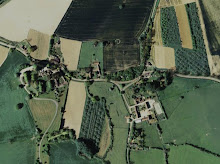
This image is from the latest Google Earth program. There looks to be well over 100 trees here, and most look mature. If so it could be the biggest pear orchard I've ever visited. I will keep you updated. How exciting!

Sunday, October 11, 2009

A giant 'Green Horse' spotted near Broadway


Many thanks to Karen and Mark for sending me this photo of another giant perry pear tree near Broadway, Worcestershire. (They think it's the variety 'Green Horse', hence my rather lame bit of wordplay!) They are the craftsmen behind Rockingham Forest Cider and have an excellent blog too which has a good bit of detail on the process of making perry, that softly sophisticted English drink.

Tuesday, October 6, 2009

Perry pears in Bledington, Gloucestershire


Next to an old farm by the King's Head Inn, Bledington is this superb perry pear orchard. It has twelve trees, all of different varieties and all well over 100 years old. I expect it is particularly beautiful when the blossom is out so we may have to pencil in a revisit for early next year...


Apparently, 'You plant pears for your heirs'. Not sure about my heirs just yet, but I like the idea of investing in such a long lived fruit tree. I really want to get a few planted at Charingworth but I need to track down somewhere that supplies them and see if I can get any varieties unique to the Cotswolds. (Then heirs?)


All twelve trees are different. I expect this is quite usual for old farm orchards, where having a lot of different varieties to choose from was more useful than just one or two. Perhaps having a range of fruit helps with making perry too. Unfortunately I am a complete beginner with perry pears but it would be great to take along an expert and get these identified. Must learn more!


This tree was particularly impressive, with its huge twisted trunk an ideal habitat for all kinds of creatures.


This is the same tree as the previous picture, with me sitting for scale. I think it may be the biggest pear tree I have encountered so far, even larger than the beauty at Mount Pleasant near Shipston-on-Stour. I wonder if anyone out there knows of a bigger one?
Related Posts with Thumbnails